This is a high-level review of Kali Linux, a specialized Linux distribution built for security professionals and enthusiasts. Designed for penetration testing, security research, and other cybersecurity tasks, Kali Linux comes preloaded with a comprehensive suite of tools right out of the box. It uses the lightweight Xfce desktop environment by default, providing a fast and efficient interface for security-focused workflows.

Installation Experience
Installation was really straight-forward and like most other Linux Distros, asking for things like keyboard, language, software package options, users, bootloader, and install.
First Impressions and Performance
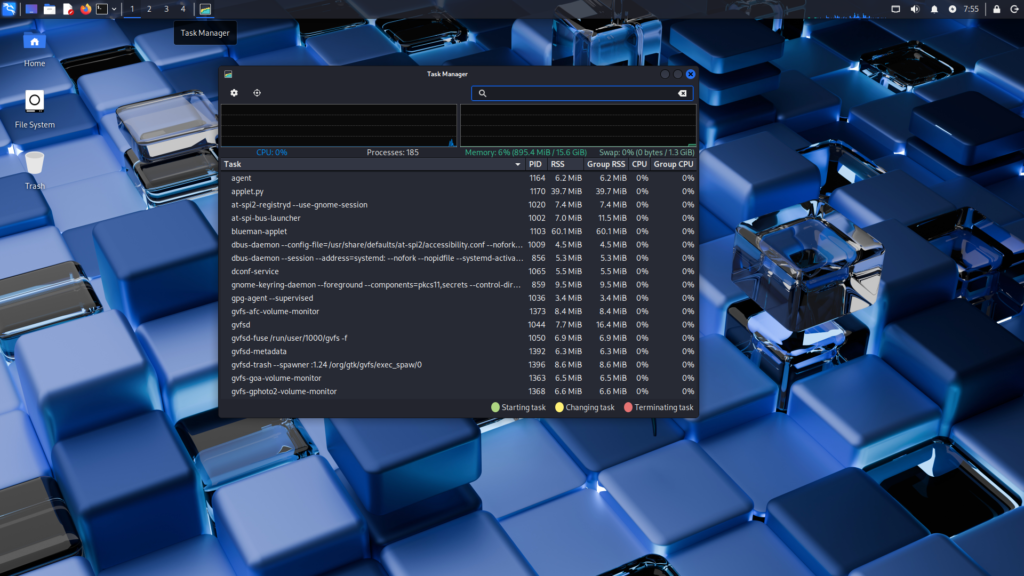
The GUI felt fast and responsive during testing, with smooth window animations and no noticeable lag when launching applications. Memory usage at startup was minimal, which is impressive considering the number of security tools available on the system.
Disk usage was the highest of all the distributions tested, largely because I chose the default installation that includes a broad selection of preinstalled tools. Kali offers more granular installation options, allowing you to select only the toolsets you need. If you are working in a virtual machine or on storage-constrained hardware, customizing the package selection during setup can significantly reduce the overall footprint.
Memory, Processes, and Disk Space
| Memory Usage after startup | Disk Usage on Fresh install | Process Count after startup | |
| Kali Linux 2025.4 | 895 MB | 15.2 GB | 185 |
Looking to see how Kali Linux stacks up against other Xfce Linux Distros, check out this post.
Software
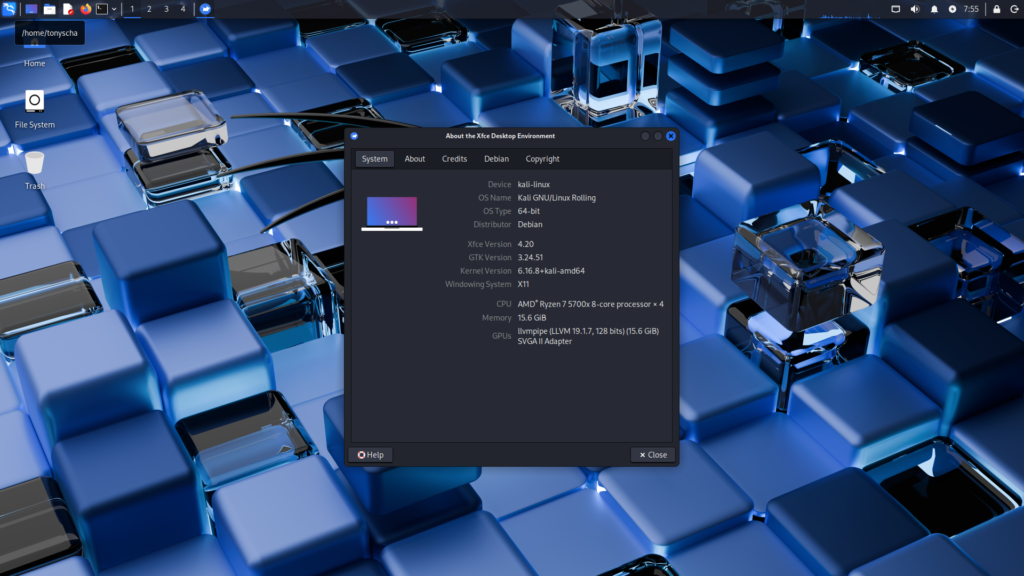
- Linux distribution family: Debian
- Kernel: 6.16.8+kali-amd64
- Desktop Environment: Xfce 4.20
Kali Linux includes the 6.16.8+kali-amd64 kernel and Xfce 4.20 desktop environment. It also included both Firefox and Chromium browsers and tons of tools for security research.
Target Audience
Kali Linux is best suited for security professionals, ethical hackers, students learning cybersecurity, and IT enthusiasts who want hands-on experience with penetration testing tools. If you are studying for certifications, practicing in a lab environment, or testing your own network for vulnerabilities, Kali gives you everything you need in one place. It is not designed to be a daily driver for general computing, but for anyone serious about security research or offensive testing, it provides a focused and purpose-built environment.
Community Support
Kali Linux has a strong and active community, especially within the cybersecurity space. There are plenty of forums, documentation, and YouTube tutorials available, along with official resources from the Kali team. Because it is widely used in security training and certifications, finding help or troubleshooting guidance is usually straightforward.
Final Thoughts
Kali Linux does exactly what it is designed to do. It delivers a focused, security-first experience with a massive toolkit available from the start. Performance was solid in testing, and while the default installation uses more disk space than most general-purpose distros, that tradeoff makes sense given its intended use.
This is not a distribution for casual desktop users, but for security professionals, students, and lab environments, it remains one of the most complete and purpose-built options available. If your goal is learning, testing, or practicing cybersecurity, Kali Linux is a the distro of choice.
One thought on “Kali Linux 2025.4 Review”